Spain's position regarding the Iran war did not arise out of nowhere. It has a direct antecedent in the Spanish response to the Gaza conflict, which led the Sánchez Government to be one of the first European countries to recognize the Palestinian State and to publicly criticize Israeli military action. When the American and Israeli attacks against Iran began on February 28, 2026, Spain already had built a foreign policy narrative based on the defense of international law, support for the two-state solution in the Middle East and the rejection of unilateral military action.
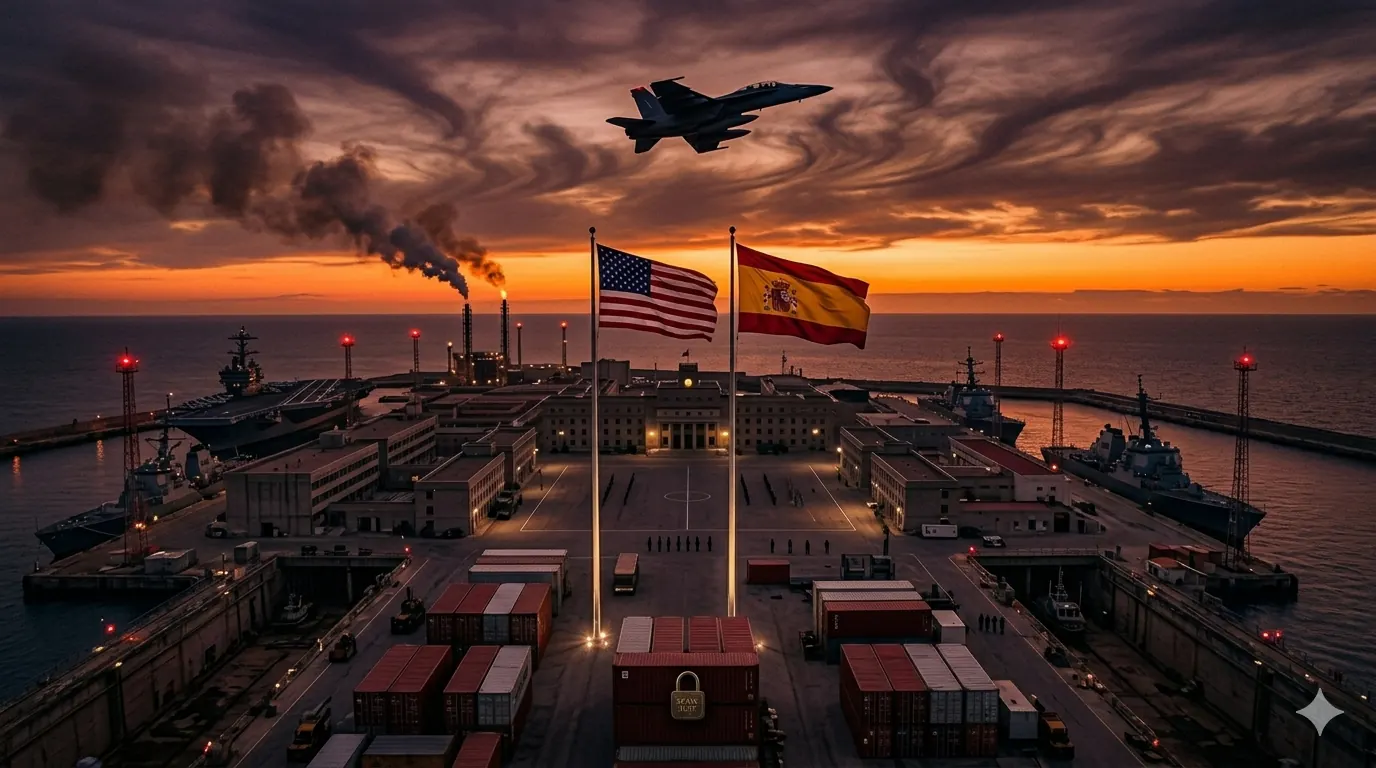
The consistent application of that narrative led to three decisions that shook Spanish and international diplomacy. The first was to deny the military bases of Rota and Morón for offensive operations against Iran. The second was the withdrawal of the Spanish ambassador from Israel on March 11, citing the "escalation of the conflict." The third was the refusal to increase defense spending to the 5% that Trump demands, arguing that NATO's 2% target is the appropriate level.
The citizen protest: the largest since the No to the 2003 war
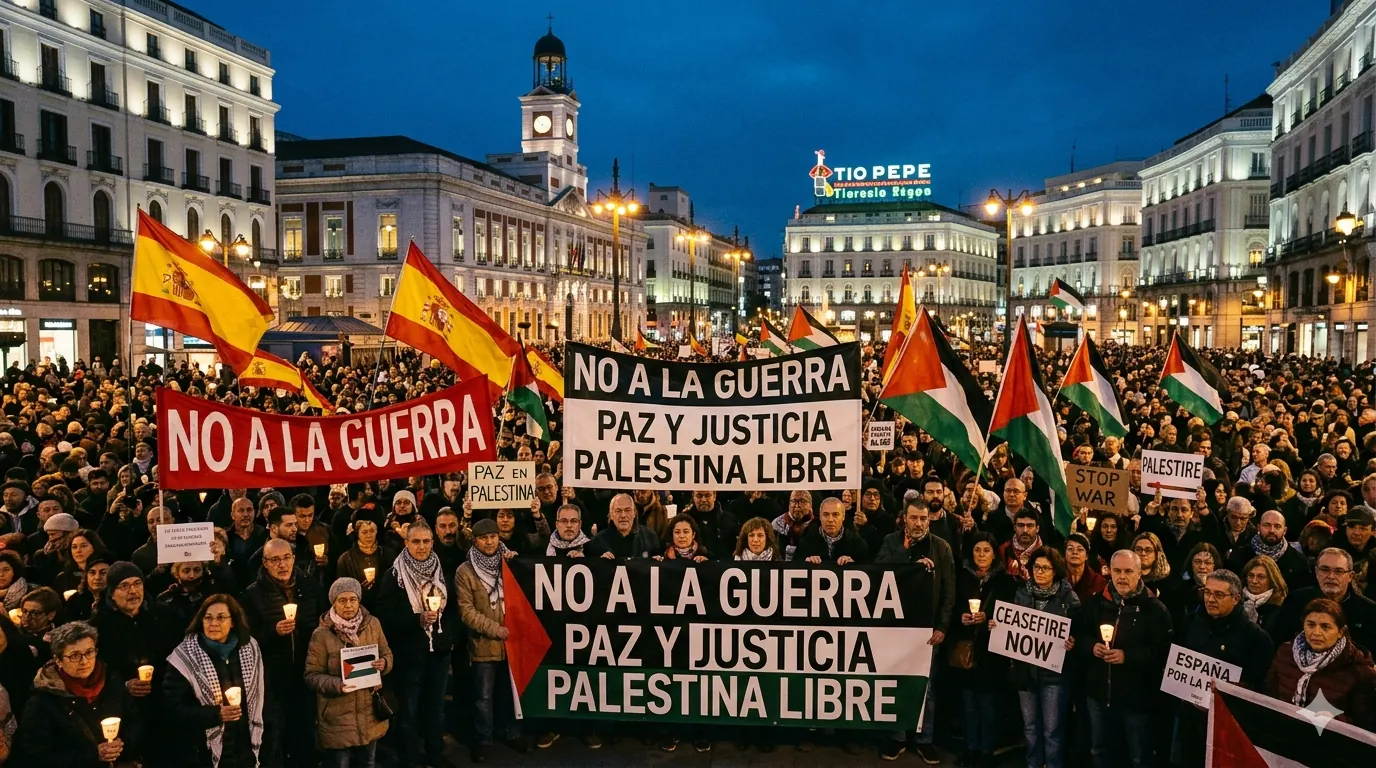
On March 14, 2026, 150 simultaneous protests were held in different Spanish cities against the war in the Middle East. The mobilization was broad, varied and massive in the big cities. In Madrid, the central demonstration brought together tens of thousands of people. The conveners included pacifist organizations, left-wing parties, Palestine solidarity groups and religious groups. In parallel, 200 cultural figures signed a manifesto against the attacks on Iran. The United States Embassy in Madrid asked its citizens to avoid gatherings.
Spanish political analysts point out that the dimension of the protests has a genuine component of citizen opposition to the war and a component of political mobilization organized by Sánchez's government partners - especially Sumar, who leads part of the coalition and which has opposition to the war as one of its main identity axes. Separating the two components is difficult, but the size of the mobilization suggests that there is more than party politics behind the demonstrations.
Spain in the face of the Iran war · Position and consequences
- Feb 28 2026: start of the war · Spain condemns the attacks as “unilateral action”
- March 2: Spain denies Rota and Morón bases for offensive operations
- March 11: Spain withdraws its ambassador from Israel
- March 14: 150 protests throughout Spain against the war · 200 cultural personalities sign manifesto
- Friction with allies: Spanish position contrasts with that of France, Germany and Italy (limited defensive support)
- Internal citizen support: broad according to surveys · between 60-70% reject Spanish military participation
The Spanish position within Europe: coherence or isolation?
Within the European framework, Spain's position is the furthest from the Atlantic axis. France, Germany and Italy, although with nuances, have offered some defensive support to American operations, without participating directly. The United Kingdom has gone further. Spain is the country that has said the clearest and most public no, which has generated diplomatic discomfort even among its community partners who share the criticism of the conflict but do not want to deteriorate their relationship with Washington in the same way.
Sánchez defends the coherence of the Spanish position: if military actions violate international law, Spain cannot be complicit in them, regardless of who carries them out. Its critics—inside and outside Spain—argue that foreign policy cannot be solely principled, that Spain has alliance obligations that it cannot selectively ignore, and that the cost of diplomatic isolation with the world's most powerful partner can be very high in the long term. The renewed agreement on the Rota and Morón bases suggests that the parties have found a fragile balance to avoid further escalating the bilateral conflict, but the underlying tension remains.
Share this article