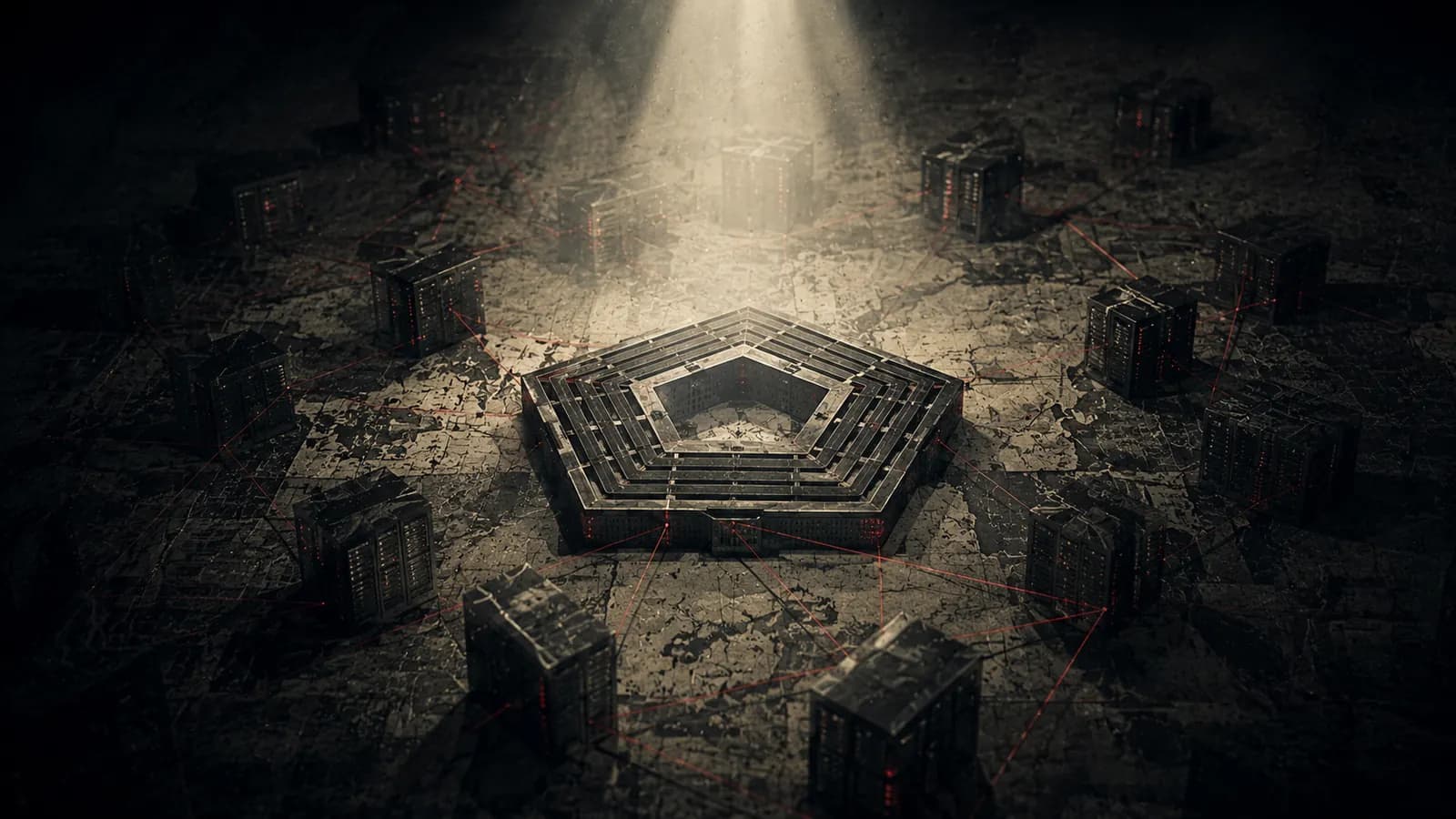
On May 1, 2026, the United States Department of Defense made official an agreement that for months had been managed discreetly but which, now made public, redefines the relationship between large technology companies and the American military apparatus. Eight companies—Google, OpenAI, Nvidia, Microsoft, Amazon Web Services, SpaceX, Oracle and Reflection AI—have signed contracts to deploy artificial intelligence directly into the highest-security classified American military networks.
The acronyms that define the scope of the agreement are IL6 and IL7. These are the Department of Defense's highest levels of security for sensitive data. IL6 covers secret-level information that could cause serious harm to national security if compromised. IL7 covers information classified as Top Secret with additional compartmentalizations. When a technology company operates in IL6/IL7, it is not simply providing software to a government agency; It is being integrated into the intelligence and decision architecture of the most powerful military power in the world.
What AI does within classified networks
Declared uses include intelligence analysis and processing of large volumes of classified information, logistics optimization and military supply chain management, operational planning support, offensive and defensive cybersecurity, and strategic simulations. It is a list that covers virtually all the critical functions of a modern military operation, except the final decision to use force, which—according to official statements—remains the human prerogative.
Whether that last point is guaranteed in practice is an open question. When an AI processes intelligence, evaluates options, optimizes logistics, and presents commanders with a list of recommended courses of action, the line between “decision support” and “effective decision” becomes noticeably blurred. Nominal human oversight is not the same as actual human understanding of why the system recommends what it recommends.
The eight signatories of the IL6/IL7 contract with the Pentagon
- Google — Gemini models in classified networks
- OpenAI — ChatGPT/GPT in defense systems
- Microsoft — Azure Government and Copilot for Defense
- Amazon Web Services — classified cloud infrastructure
- Nvidia — accelerated processing chips and systems
- SpaceX — communications and satellite infrastructure
- Oracle — databases and sovereign cloud
- Reflection AI — next-generation AI startup
The problem of the double nature of technology
When Google, Microsoft or Nvidia integrate their systems into classified US military networks, there is no "military" version and "civilian" version of their AI models that are completely independent of each other. Advances developed for military applications—better reasoning, greater capacity for autonomous analysis, more efficient detection of patterns in large volumes of data—are eventually incorporated into general models used by millions of people around the world.
Conversely, civilian models that are deployed in military contexts bring with them the training data, behavioral patterns, and limitations that were designed for civilian use. Integration is not one-way. The IL6/IL7 contracts establish a symbiosis between civil and military technological development whose long-term implications are difficult to predict with precision.
The global perspective: China and the race that never stops
The argument most used to justify the accelerated militarization of American AI is that of competition with China. The Chinese government has been investing massively in artificial intelligence with explicit defense applications for years, without the ethical restrictions or public debates that complicate the process in the United States and Europe. If AI will be the determining factor of military superiority in the coming decades – as many strategists argue – then any limitation on American development is an advantage for adversaries.
The argument has empirical weight. But it also has consequences that proponents of militarization rarely articulate clearly enough. If the United States normalizes the deep integration of the largest private technology companies into its classified military apparatus, it establishes a model that other countries—including China, Russia, and eventually non-state actors—can replicate with their own companies and their own ethical standards, which may be considerably more lax.
To note: None of the eight companies that signed the IL6/IL7 contracts is a defense company in the traditional sense. They are consumer products and business services companies that now also operate at the highest level of American military classification. Their civilian employees, their investors, their users around the world, and their business partners in other countries do not, in most cases, have any visibility into what part of the technology they use also operates in those contexts.
The question that is not being asked
The public debate over the militarization of AI in the United States has focused almost exclusively on whether it is a good or bad idea for technology companies to work with the Pentagon. It's a legitimate question. But there is a more fundamental question that rarely appears prominently enough: What kind of governance is in place to oversee how that AI is used within classified systems?
The contracts are secret in their operational details. Specific projects are classified. Impact evaluations are internal to the Department of Defense. Democratic scrutiny over one of the most significant deployments of advanced AI technology happening in the world right now is, in practice, almost non-existent. This accountability gap is not just an American problem. It is the underlying problem of all the militarization of AI: the technology advances in secret, and the public debate arrives, if it arrives, too late.
Share this article