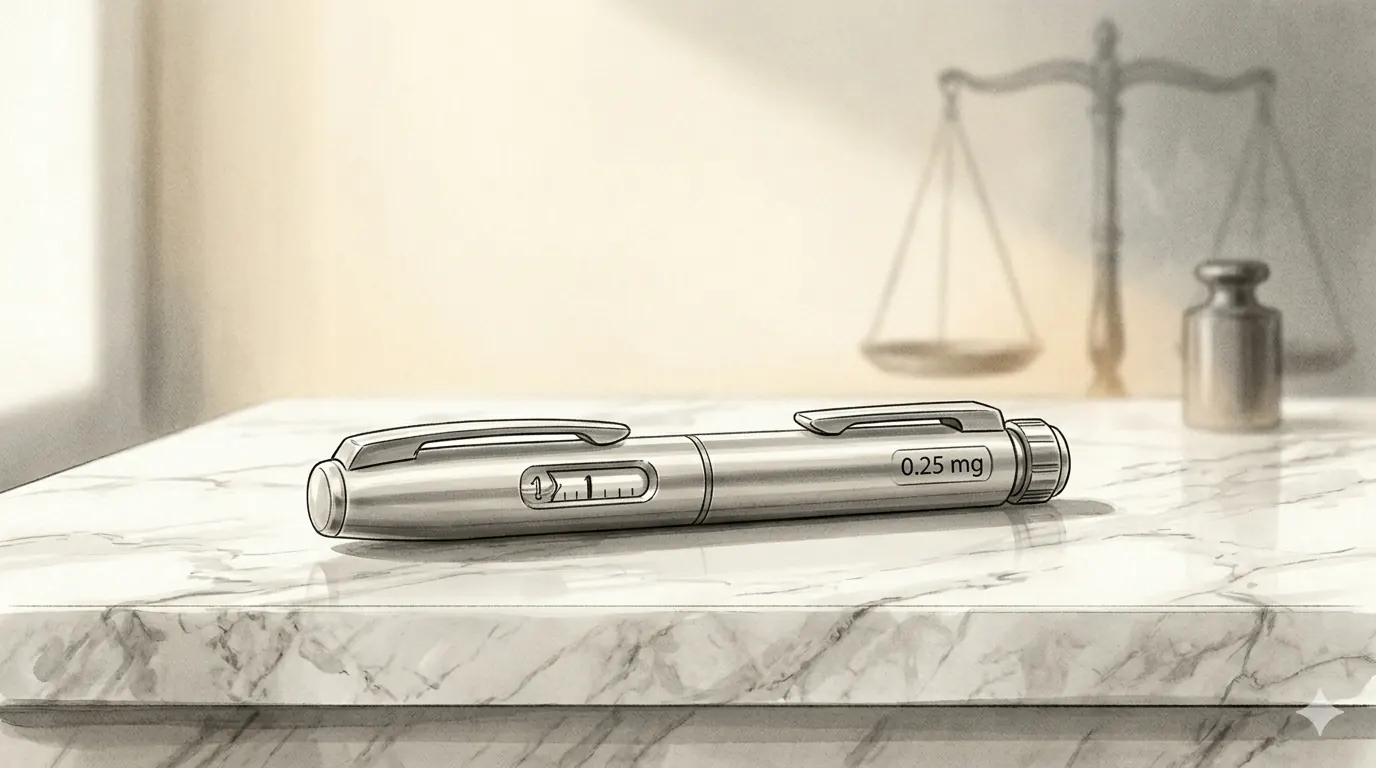
When Phase 2 clinical trials of retatrutide began showing up with patients asking to reduce their dosage because they felt they were losing too much weight, Eli Lilly researchers knew they had something extraordinary on their hands. It was the first time in the history of obesity drug trials that this was a relevant clinical problem. The results of the phase 3 trials, presented throughout 2026, have confirmed that those preliminary data were not a statistical anomaly.
Retatrutide is what researchers call a triple agonist: it acts simultaneously on three hormone receptors—GLP-1, GIP, and glucagon—that regulate appetite, metabolism, and energy expenditure. The best-known drugs on the current market, such as Ozempic (semaglutide) or Mounjaro (tirzepatide), act on one or two of these receptors respectively. Retatrutide activates all three, and the results of that combined action are quantitatively different from anything seen before.
The numbers of the TRIUMPH-4 trial
In the TRIUMPH-4 trial, the most recent to publish results, participants with obesity and knee osteoarthritis who received the 12 mg dose lost an average of 28.7% of their body weight in 68 weeks. In absolute terms, that equates to approximately 32.3 kilos for a participant with the average weight in the study. 58.6% of the participants in that group achieved a weight loss of more than 25%, and 39.4% exceeded 30%. For comparison: gastric bypass surgery, the gold standard surgical procedure for severe obesity, produces average losses of between 25% and 35% of body weight. Retatrutide approaches that range with a weekly injection.
TRIUMPH-4 results — Retatrutide 12 mg vs placebo (68 weeks)
- Average weight loss: 28.7% of body weight (vs. 2.1% with placebo)
- Average weight lost: 32.3 kg (~71 lbs)
- Patients with loss ≥25%: 58.6% (vs. 1.3% placebo)
- Patients with loss ≥30%: 39.4% (vs. 0.8% placebo)
- Reduction in joint pain (WOMAC scale): 74.3% on average
- More than 1 in 8 patients: completely free of knee pain at the end of the trial
But the TRIUMPH-4 results aren't just about weight. The trial also measured the impact on joint pain in patients with knee osteoarthritis, a common and debilitating consequence of severe obesity. The average pain reduction was 74.3%, and more than one in eight participants treated with retatrutide were completely pain-free at the end of the trial. It's a finding that has broader implications than just weight loss: it suggests that retatrutide could be an effective treatment for knee osteoarthritis in obese patients, reducing or avoiding the need for joint replacement surgeries.
The TRANSCEND program: type 2 diabetes
While the TRIUMPH program focuses on obesity, the TRANSCEND program evaluates retatrutide in type 2 diabetes. In March 2026, Eli Lilly published positive results from the TRANSCEND-T2D-1 trial, the first in the series to be completed. The study, with more than 2,050 participants, showed reductions of more than 15% in body weight along with significant improvements in glycemic control—measured by glycosylated hemoglobin—that outperformed placebo in all major parameters.
For patients with type 2 diabetes, retatrutide would not be just another weight loss drug. It would be a drug that simultaneously addresses obesity, blood sugar control and, potentially, the insulin resistance that characterizes the disease. Detailed results will be presented at the American Diabetes Association Scientific Sessions in June 2026.
The mechanism that changes everything: glucagon
The fundamental difference between retatrutide and its predecessors in the GLP-1 class is the activation of the glucagon receptor. This hormone, produced in the pancreas, has the opposite effect of insulin: it raises blood glucose and also increases energy expenditure by stimulating fat burning in the liver. The combination of GLP-1's appetite suppression, GIP's improved satiety, and glucagon's increased metabolic expenditure produces more sustained and greater weight loss than either of these mechanisms alone can achieve.
Retatrutide produces weight losses that are in the bariatric surgery range — and also reduces joint pain in three-quarters of patients with knee osteoarthritis.
When and how it will hit the market
As of May 2026, retatrutide remains an investigational compound without approval from the FDA, EMA or the Spanish AEMPS. Eli Lilly has seven additional Phase 3 trials underway—the full TRIUMPH program—with results expected throughout 2026 and 2027. The TRIUMPH-1 trial, the most critical for regulatory approval in obesity, is the one that will define the drug's indication label. The cardiovascular outcomes trial (TRIUMPH-CVOT), with about 10,000 participants, will not have results until 2028 or later.
If the remaining trials confirm the efficacy and safety profile seen so far, Eli Lilly could submit an application for approval to the FDA for obesity in late 2026 or early 2027. Approval, if it comes, could occur in 2027 or 2028 depending on the speed of the regulatory process. Meanwhile, some patients are turning to unregulated versions purchased online, raising alarm in the medical community about the unsupervised use of a compound whose full long-term safety profile is still being evaluated.
Share this article