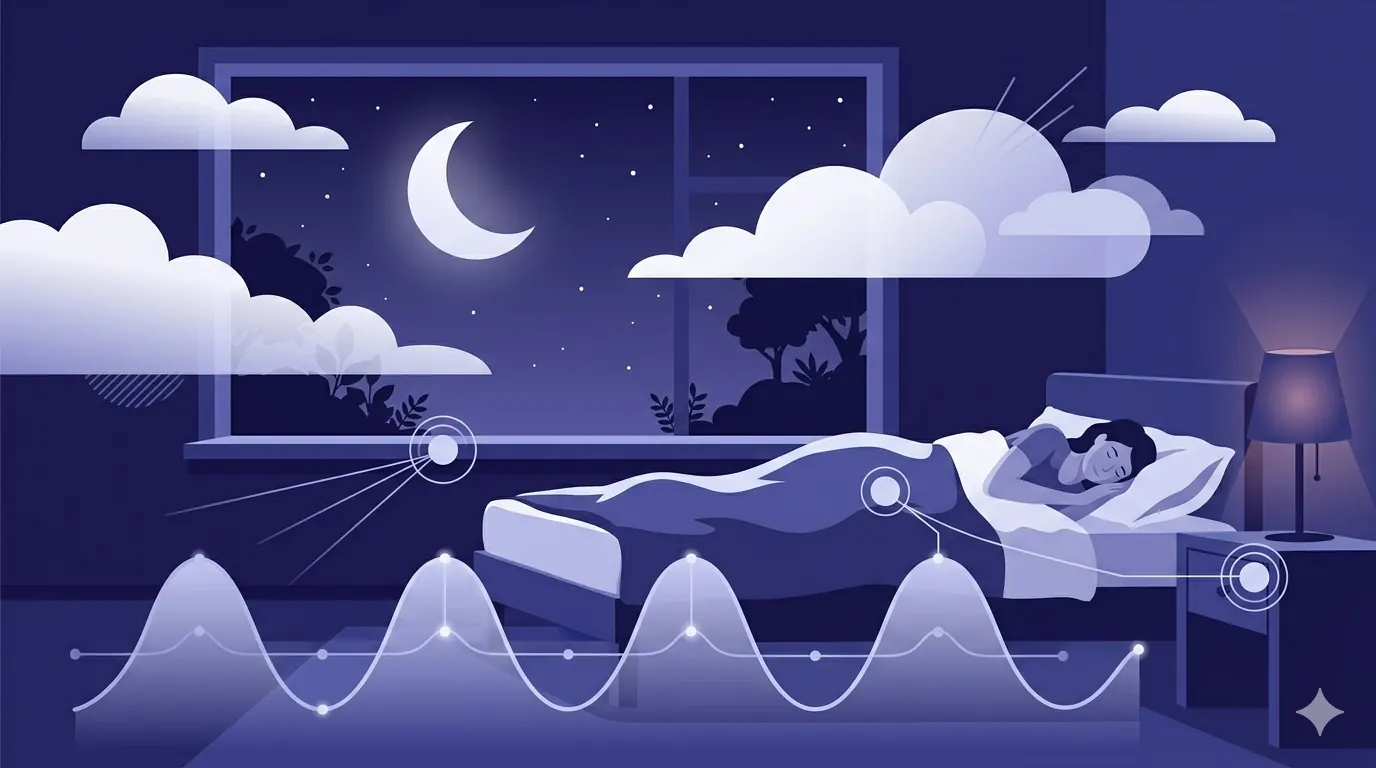
Why Sleep Is the Foundation, Not the Luxury
Sleep is the single most cost-effective health intervention available, and it is free. Chronic short sleep is linked to higher rates of heart disease, type 2 diabetes, depression and early mortality. Yet most people treat it as the first thing to sacrifice. The good news: sleep quality responds quickly to a handful of concrete changes, and you usually notice the difference within a week.
How Much Sleep You Actually Need
For adults, the consensus recommendation is 7 to 9 hours per night. The idea that some people "thrive" on five hours is mostly a myth: genuine short-sleepers are rarer than one in a thousand. If you rely on an alarm to wake up and feel groggy for the first hour, you are almost certainly sleep-deprived, not naturally efficient.
Quantity is only half the picture. You cycle through light sleep, deep (slow-wave) sleep and REM roughly every 90 minutes. Deep sleep repairs the body; REM consolidates memory and regulates mood. Fragmented sleep wrecks this architecture even if the total hours look fine on paper.
Seven Evidence-Based Changes That Work
1. Keep a fixed wake time. Your circadian clock is anchored by when you get up, not when you go to bed. A consistent wake time, even on weekends, stabilises everything else.
2. Get morning daylight. Ten to twenty minutes of outdoor light within an hour of waking sets your clock and improves alertness now and sleepiness tonight. On dark mornings, a 10,000-lux light box is a reasonable substitute.
3. Cut caffeine after early afternoon. Caffeine has a half-life of five to six hours, so a 4 p.m. coffee leaves a meaningful dose in your system at midnight. Set a hard cut-off around 2 p.m.
4. Cool the room. Core body temperature has to drop for sleep to begin. A bedroom around 18°C (65°F) and a warm shower 90 minutes before bed both help by pulling heat away from the core.
5. Protect a wind-down hour. Bright screens and demanding work keep the nervous system in "go" mode. Dim the lights, lower the stimulation, and let the brain downshift.
6. Be honest about alcohol. A nightcap helps you fall asleep but suppresses REM and fragments the second half of the night. It is one of the most common hidden causes of unrefreshing sleep.
7. Use the bed for sleep only. If you are awake for more than about 20 minutes, get up and do something dull in low light until you feel sleepy. This keeps your brain associating the bed with sleep rather than frustration.
What Does Not Work
Sleep-tracking rings and watches are motivating but not diagnostic; obsessing over a "sleep score" can itself cause anxiety that worsens sleep (clinicians now call this orthosomnia). Melatonin is useful for jet lag and shifting your clock, but it is a timing signal, not a sedative, and high doses do not help. Most "sleep supplements" have little evidence behind them.
When to See a Doctor
If you snore loudly and wake unrefreshed despite enough hours, ask about sleep apnoea, which is common and seriously undertreated. Persistent insomnia lasting more than three months has a proven first-line treatment, CBT-I (cognitive behavioural therapy for insomnia), which outperforms sleeping pills long term. Both are worth raising with a clinician rather than self-managing indefinitely.
Frequently Asked Questions
Can you catch up on sleep at the weekend?
Partly. A long weekend lie-in repays some short-term sleep debt, but it shifts your clock later and makes Monday harder. Consistency beats binge-recovery.
Is it bad to nap?
No, if it is short. A 10 to 20 minute nap before mid-afternoon boosts alertness without denting night-time sleep. Long or late naps do the opposite.
How long until changes take effect?
Most people notice better sleep within one to two weeks of fixing their wake time, light exposure and caffeine timing. Circadian changes compound, so it is worth holding the routine for a full month.
Sources
Share this article