From Fringe to Mainstream — But Does It Work?
Cold plunges, ice baths and cold showers went from extreme-athlete ritual to social-media obsession in just a few years. The marketing promises everything: faster recovery, fat loss, stronger immunity, sharper focus. The honest picture is more mixed. Some benefits are real and well supported; others are overstated or unproven. Here is what the evidence actually says, and where the hype runs ahead of it.
What the Evidence Genuinely Supports
A reliable mood and alertness boost. Cold water exposure triggers a sharp rise in noradrenaline and dopamine, producing the well-known surge of alertness and the elevated mood many people feel for hours afterward. This effect is consistent and is probably the strongest reason regular users keep going back.
It is a trainable stress response. Voluntarily facing the discomfort of cold and staying calm is a form of stress practice. Many people report it builds a sense of resilience that carries into the rest of the day.
Where the Claims Get Shaky
Fat loss. Cold does activate brown fat, which burns energy to generate heat, but the calorie effect in humans is small. Cold exposure is not a meaningful weight-loss tool on its own.
Muscle recovery — with a catch. Ice baths can reduce soreness after hard exercise, which is why athletes use them. But here is the twist: cold immediately after strength training can actually blunt the muscle-building signal you were training for. If your goal is to grow muscle, do not ice straight after lifting.
Immunity. Some studies show fewer sick days among cold-shower users, but the evidence is preliminary and the effect modest. Treat stronger immunity as a possible bonus, not a guarantee.
How to Try It Safely
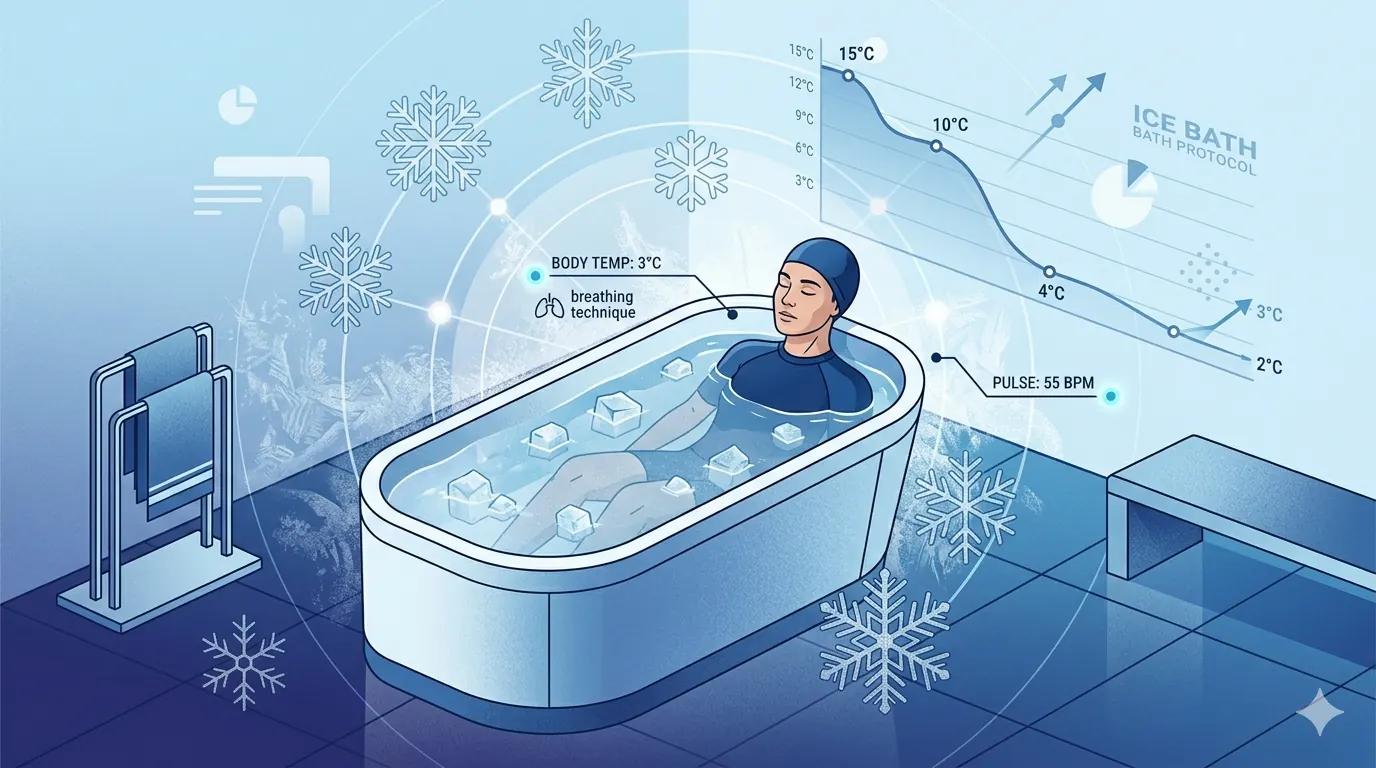
Start with the end of a normal shower: 30 seconds of cold, building gradually over weeks. A typical cold plunge is around 10–15°C for 2–5 minutes; longer and colder is not better and raises the risk. Focus on controlling your breathing rather than gasping. Get out if you start shivering uncontrollably or feel faint.
Who Should Be Careful
Cold immersion causes an immediate spike in heart rate and blood pressure. If you have heart disease, high blood pressure, or are pregnant, talk to a doctor before starting. Never cold-plunge alone in open water — the cold-shock response can be dangerous, and the danger is real regardless of how experienced you are.
Frequently Asked Questions
Cold shower or ice bath — is one better?
For mood and alertness, a cold shower captures most of the benefit and is far more practical. Ice baths reach colder temperatures useful for athletic recovery, but for everyday wellbeing the shower is enough.
How cold and how long?
Cold enough to be uncomfortable but safe — roughly 10–15°C for a plunge — and only a few minutes. Pushing colder or longer increases risk without adding proven benefit.
Should I do it before or after a workout?
Before or well after is fine. Avoid it immediately after strength training if muscle growth is your goal, since cold can dampen the adaptation.
Sources
Share this article