To understand the scale of what is happening with crypto projects linked to Donald Trump, we must start with a fact that is unprecedented in American political history: the president of the United States—the person who appoints the federal banking regulator, who appoints the attorney general, and whose administration oversees financial markets—has a direct stake in a crypto company that is applying for a federal banking license from the regulator his own administration controls.
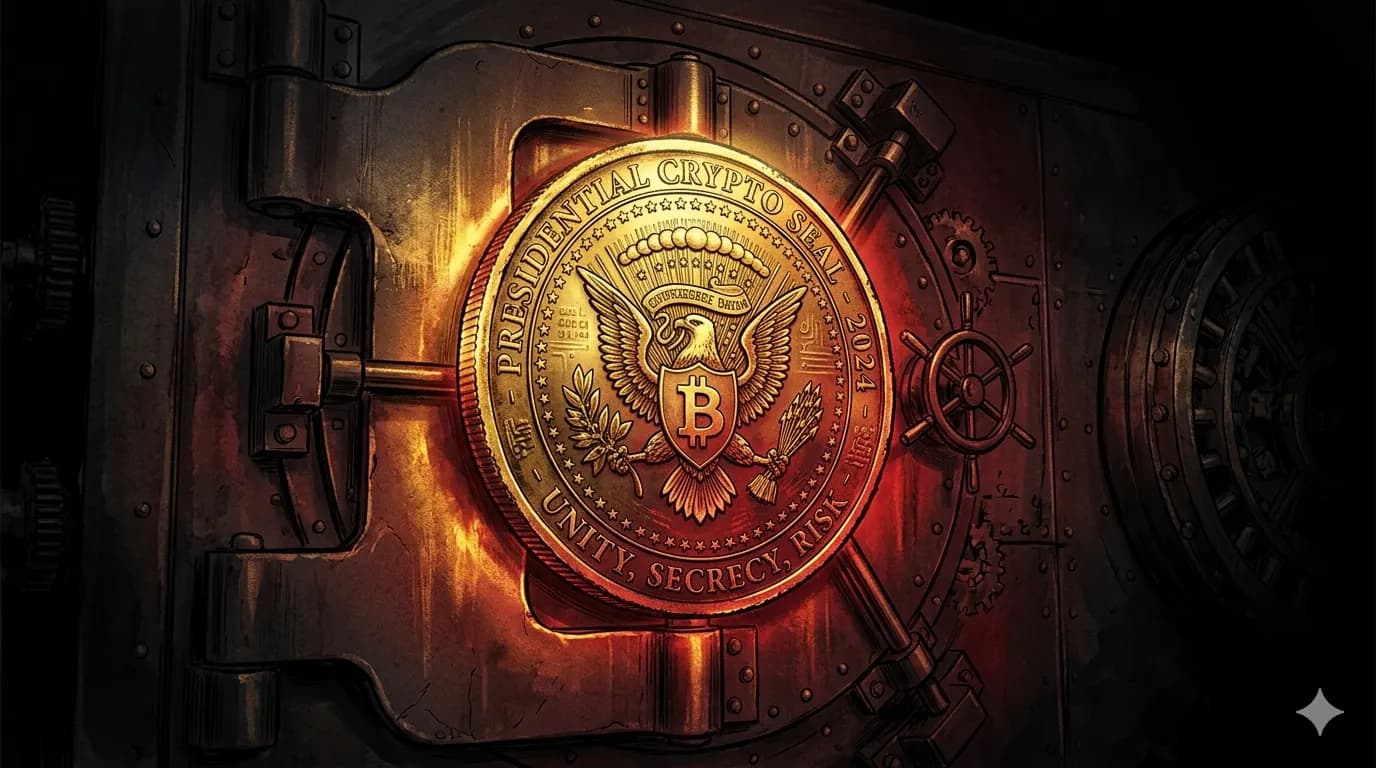
World Liberty Financial was founded in 2024 and presented itself as a DeFi protocol designed to “democratize finance” and “free users from the big bad behind the scenes.” Its founders are Trump's children, with Zach Witkoff — son of Trump's special envoy to the Middle East, Steve Witkoff — as co-founder. The Trump family and associated entities own 22.5 billion $WLFI tokens, the majority of the total supply. The token is not backed by any assets and does not grant ownership over any company; it simply allows voting on the rules of the protocol. It was trading around $0.079 in April 2026.
The USD1 stablecoin and the United Arab Emirates
The most controversial element of the Trump financial ecosystem is the USD1 stablecoin, issued by World Liberty Financial. A stablecoin is a cryptocurrency designed to maintain parity with the US dollar, backed by real assets in reserve. USD1 was presented as the crypto alternative to the conventional dollar for transactions in decentralized finance.
The problem is not the product itself, but who buys it and why. A United Arab Emirates sovereign wealth fund, led by Sheikh Tahnoon bin Zayed Al Nahyan—brother of Abu Dhabi's ruler—has signed a $500 million deal for a 49% stake in World Liberty Financial. Of those 500 million, 187 million were paid in advance directly to Trump family entities. Eric Trump signed the agreement. Days after that payment, the Trump administration reversed national security restrictions that prevented the United Arab Emirates from accessing Nvidia's most advanced AI chips.
World Liberty Financial — The numbers of the conflict
- WLFI tokens held by Trump and associated entities: 22.5 billion (majority of supply)
- UAE sovereign fund investment: $500M for 49% · $187M paid to Trump entities in advance
- Justin Sun (Tron): $75M in WLFI + $100M in memecoin TRUMP · now suing
- Application for a federal banking license: World Liberty Financial requested it from the OCC (regulator appointed by Trump)
- Steve Witkoff: +$280M to his assets in one year thanks to WLF · +$2.3B total assets (Forbes, April 2026)
- Senator Elizabeth Warren: "We have never seen financial conflicts of this magnitude"
The application for a banking license: the point of no return
The boldest—and most controversial—move came when World Liberty Financial applied for a federal banking license from the OCC (Office of the Comptroller of the Currency), the federal banking regulator whose director is appointed by the Trump administration. Banking law professor Todd Phillips, in an analysis published in August 2025, described the situation as a "chilling dynamic": the president participates in companies strictly regulated by his own administration.
Senator Elizabeth Warren formally asked the OCC to delay consideration of the request until Trump gave up his stake in World Liberty Financial. "We have not seen financial conflicts or corruption of this magnitude," he told the Senate Banking Committee. Democrats on the House Financial Services Committee have alleged “pay-to-play” — purchased influence — in their handling of several regulatory cases involving companies linked to people who have invested in Trump's crypto projects.
Binance and sanctions on Iran
The darkest layer of the matter is the connection with Binance, the largest cryptocurrency exchange in the world by trading volume. World Liberty Financial relies heavily on Binance for its operations. But Binance, according to investigations published by Fortune in February 2026 based on internal documents and multiple sources, continued to make it easier for Iranian traders to avoid American sanctions even while operating under a compliance monitor ordered by the Department of Justice as part of its 2023 plea deal. Entities linked to Iran received more than $1 billion through Binance between March 2024 and August 2025. Binance fired al minus five internal investigators who had internally pointed out those transactions.
The conflict of interest in summary: The US president has a stake in a crypto company · that company requests licenses from the regulator he appoints · foreign investors pay him hundreds of millions · and the infrastructure used by his company is being investigated for helping to evade American sanctions. None of this is normal in American financial history.
Share this article