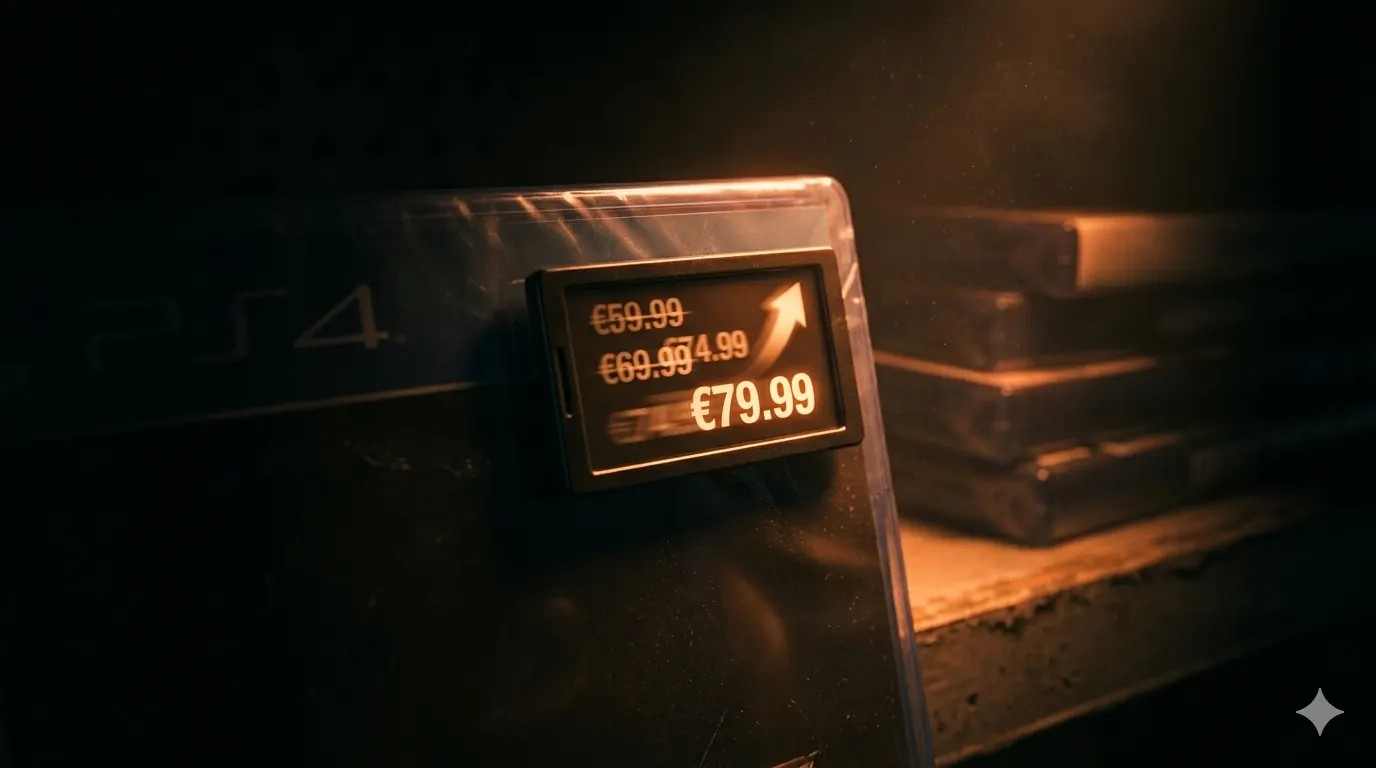
In 2020, a top-tier video game cost $59.99. In 2023, PS5 and Xbox Series X titles moved to $79.99 in some cases. In 2026, Nintendo sells Switch 2 games at €89.99 and there is speculation that GTA 6 may be the first AAA to standardise $79.99 in the US — which would translate to at least that in Europe. In under six years, the entry price for top-line games has risen between 33% and 50%.
The industry's justification is well-known: AAA development costs have exploded. Teams that had 50 people in 2010 now have 500. Development times that were two to three years are now five to seven. Open-world games require entire teams dedicated to generating the content that fills those worlds. GTA 6 reportedly cost, by unconfirmed estimates, over $2 billion — a figure that makes the priciest film budgets look modest by comparison.
The Steam analyst warning about the trap
The debate is not just whether the $80 price is justified: it is what consequences it has for a game's life cycle. A Steam data analyst whose work is closely followed in the industry has been warning for months about something many studios prefer to ignore: games that launch expensive and later discount on Steam "almost never compete with the store's deepest sales". The trap works like this: the player who does not want to pay $80 at launch waits for the discount. When the discount comes, the game competes against dozens of other titles also on sale. Without having planned the discount policy from the start, the studio is left without a coherent pricing strategy for the game's long life cycle.
The price escalation · Timeline
- 2020: standard AAA price on PS4/Xbox One, $59.99.
- 2022: PS5/Xbox Series X, some titles at $79.99.
- 2025: Nintendo Switch 2, first games at €79.99–€89.99.
- 2026: GTA 6 rumoured at $70–80 US, possibly €79.99 in Europe.
- EU cumulative inflation 2020–2026: ~20%, game price: +33–50%.
- Exception: Nintendo Switch 2 digital games now cheaper than physical.
Market fragmentation
The most worrying effect of the price escalation is market fragmentation. There is a player segment — generally younger, with less disposable income — that simply cannot access the most expensive launch-day games and migrates to free-to-play models, subscriptions or the second-hand market. That partly explains why Fortnite, Roblox and Counter-Strike 2 — all free — dominate the active-player charts with crushing margins over paid AAAs.
The other market segment, players with higher purchasing power, pays the price with little resistance: demand for GTA 6 looks practically inelastic at launch. The problem is gaming's middle class: the player who used to buy three or four AAA titles a year and now has to pick one or two. That behaviour, multiplied across millions of players, explains why individual game sales fell 11% in 2025 even though total sector revenue kept growing. People play more, but free games. They buy less, but at higher prices.
Studios face a dilemma: they need more money to build bigger games that justify higher prices. But higher prices scare off part of the buyer base, which cuts sales, which means studios need even more money to cover costs. It is a vicious circle with few exits.
Share this article