What the 50/30/20 Rule Actually Is
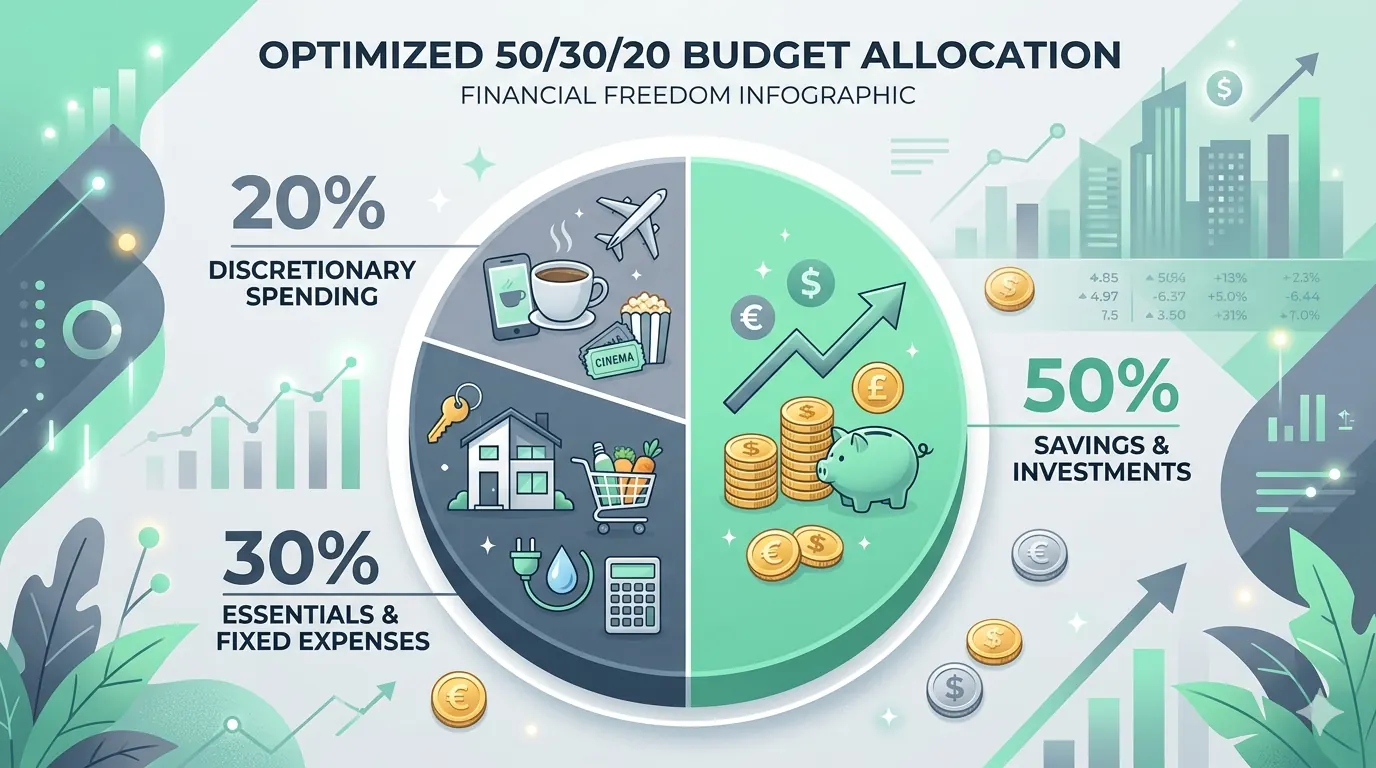
The 50/30/20 rule splits your after-tax income into three buckets: 50% for needs, 30% for wants, and 20% for savings and debt repayment. It was popularised by US senator and bankruptcy expert Elizabeth Warren in her book All Your Worth, and it has lasted because it is simple enough to actually follow. You do not need a spreadsheet with forty categories; you need three numbers.
The Three Buckets, Defined
50% — Needs. The things you genuinely cannot skip: rent or mortgage, utilities, groceries, transport to work, insurance, minimum debt payments. If you lost your income tomorrow, these are the bills that would still arrive.
30% — Wants. Everything that makes life enjoyable but is technically optional: dining out, streaming, holidays, hobbies, the upgraded phone. These are not "bad" spending — they are the reason a budget is sustainable rather than a punishment.
20% — Savings and debt. Building an emergency fund, investing for retirement, and paying down anything beyond the minimums. This bucket is the one that quietly changes your future.
How to Apply It in Four Steps
1. Find your real take-home pay. Use the amount that lands in your account after tax and pension contributions. If your employer already deducts a pension, count that within your 20%.
2. Calculate your three targets. Multiply your monthly net income by 0.5, 0.3 and 0.2. On €2,400 a month that is €1,200 / €720 / €480.
3. Sort one month of spending. Pull your last bank statement and tag every line as need, want or saving. Almost everyone is surprised by where the "wants" total actually lands.
4. Adjust the lever you can move. Needs are slow to change. Wants are where you have real control month to month. If savings are short, that is the bucket to trim first.
When the Ratios Do Not Fit
In high-rent cities, "needs" can swallow 60% or more of income, leaving the rule mathematically impossible as written. That is not a failure of your budget — it is useful information. Treat 50/30/20 as a target to move toward, not a pass/fail test. A realistic 60/25/15 that you sustain beats a perfect 50/30/20 you abandon in March. As your income rises, push the savings bucket up rather than inflating your lifestyle to match.
Why It Beats Stricter Systems
Zero-based budgeting, where every euro is assigned a job, is more precise but demands constant attention, and most people quit. The strength of 50/30/20 is psychological: three buckets are easy to hold in your head, so you keep doing it. A budget you follow imperfectly for years will always beat a perfect one you follow for six weeks.
Frequently Asked Questions
Does the 20% include my employer pension?
Yes. Any money going toward your future — pension contributions, investments, extra debt payments, or an emergency fund — counts in the savings bucket, whether you or your employer moves it.
What if I have high-interest debt?
Prioritise it inside the 20% bucket. Paying off a credit card at 20% interest is a guaranteed return no investment can match. Once it is cleared, redirect that money to saving and investing.
Should I budget gross or net income?
Net (take-home) income. The rule is about the money you actually control after tax, so use what arrives in your account.
Sources
Share this article